
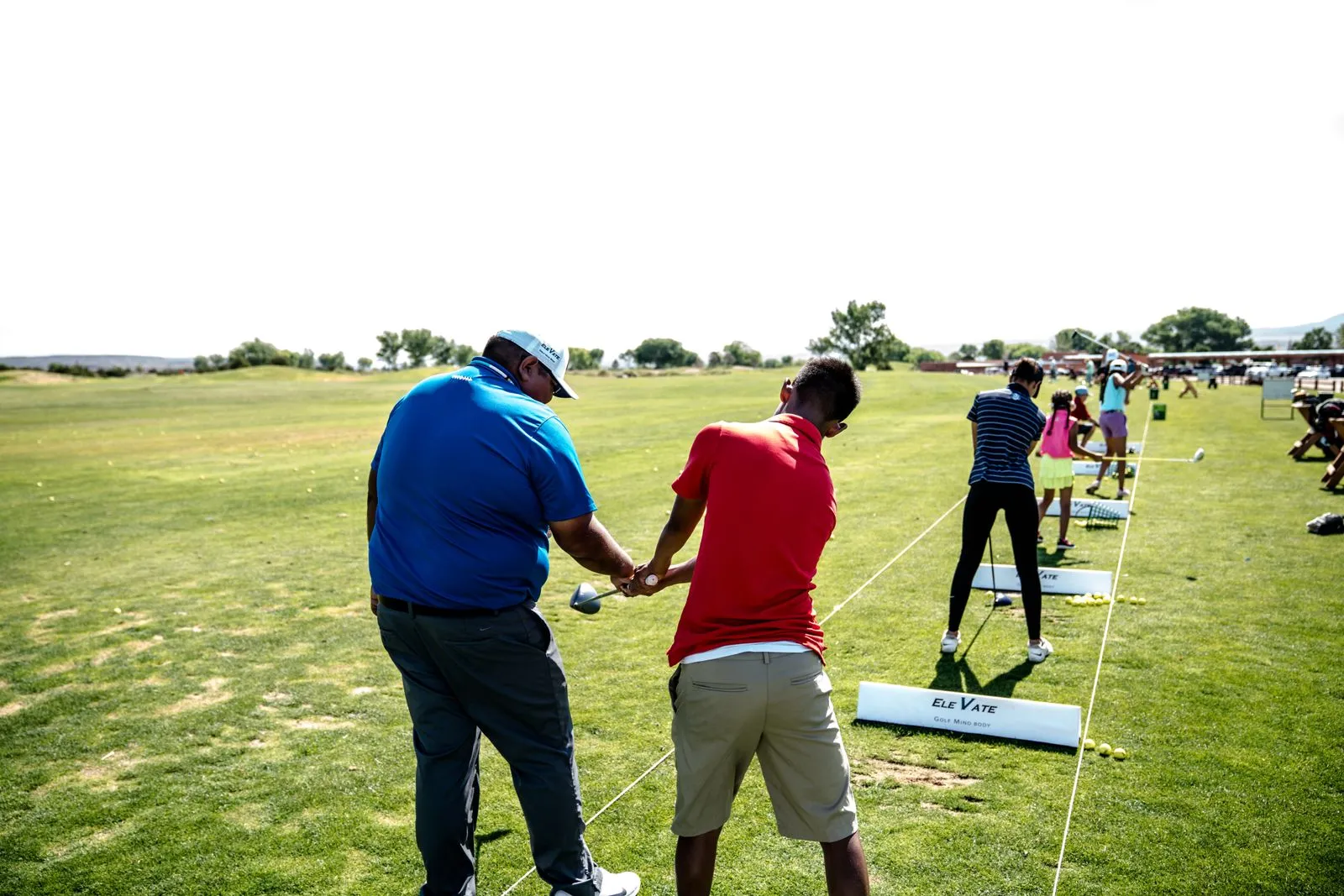
An indoor golf lesson can help you work on specific skills in a focused setting, but the best fit depends on more than the simulator or available time. Before booking, consider what you want to improve, how you prefer to practice, and what kind of coaching helps you learn. A useful first conversation should clarify the instructor’s approach and leave you with a realistic idea of what a lesson can address.
Define Your Swing Goals
Identify the problem you most want to solve. You might be trying to make more consistent contact, control a slice, improve distance, or feel more confident with a particular club. If you are unsure, describe what happens on the course rather than naming a technical fix. Specific examples help an instructor distinguish between a recurring pattern and a one-off bad shot.
Ask how the instructor would turn that concern into a lesson goal. A clear goal might focus on one observable change, such as improving strike location or starting the ball closer to your intended line. Avoid expecting a complete swing rebuild in one session. Ask what can reasonably be assessed during the first lesson and how you will know whether the work is helping.
Ask About the Lesson Process
Find out what happens before and during the session. Ask whether the instructor begins by discussing your golf history, watching your current swing, or checking basic contact and ball flight. You can also ask which clubs to bring and whether there is anything to prepare. Knowing the sequence helps you arrive ready to spend lesson time on the areas that matter to you.
Indoor technology can provide information such as ball flight or club movement, but the instructor should explain what each measurement means for your goal. Ask how they use those readings alongside observation and your own feedback. Data is most useful when it leads to a clear decision or practice task, rather than a list of numbers without an explanation.
Match Practice to Your Routine
Be honest about how often you can practice and where. A plan that requires frequent range sessions may not suit someone who can only practice occasionally. Tell the instructor whether you have access to clubs, a hitting area, or time for brief drills at home. Ask which parts of the lesson you can repeat safely and what signs will show that you are doing them correctly.
Discuss how you like to learn. Some golfers benefit from a simple feel or image; others prefer a physical demonstration or a step-by-step explanation. You can ask the instructor to give you one or two priority cues and a short practice routine. If a drill feels confusing or uncomfortable, say so during the lesson so it can be adjusted.
Clarify Feedback and Follow-Up
Feedback should be specific enough to use without overwhelming you. Ask how the instructor handles mistakes, explains corrections, and checks whether you understand a change. You might prefer direct guidance after each shot, or time to hit several balls before reviewing a pattern. Explain your preference and make sure there is room to ask questions.
Before the lesson ends, ask for a brief recap: what to work on, how to practice it, and when to reassess. A useful instructor can describe the next step without promising a particular score or instant swing change. If you are comparing options, choose the one whose teaching approach, communication, and practice plan make sense for your needs.
A good indoor lesson starts with a clear conversation about what you want to improve and how you learn best. Ask practical questions about the process, technology, practice plan, and feedback before committing. When you are ready, contact Desert Line Golf to discuss your goals and whether its instruction fits your needs.